

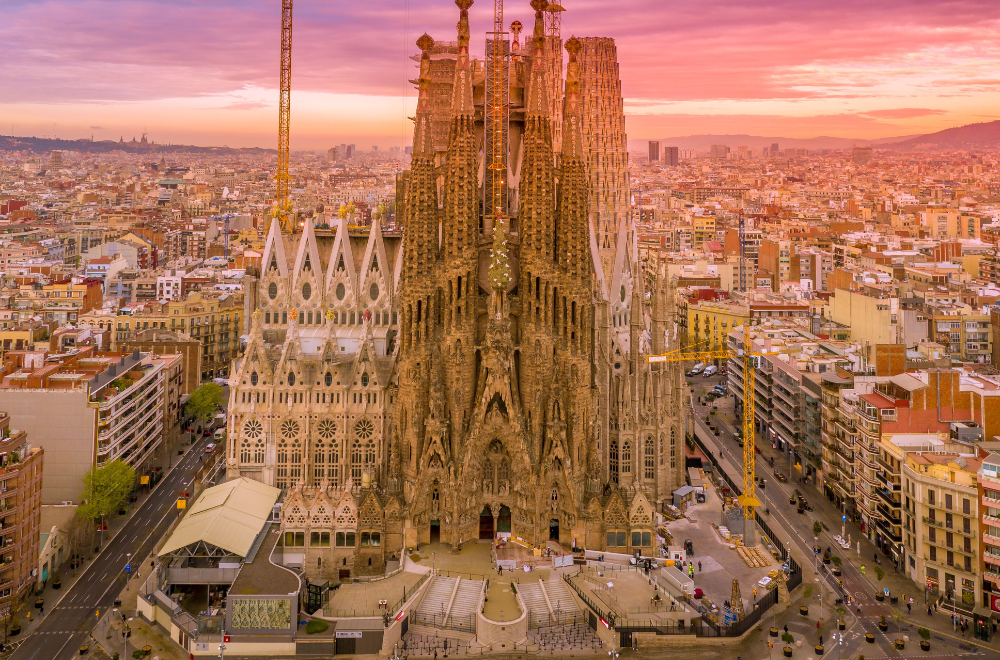
Barcelona is one of those rare cities that manages to be several things at once. It’s a city where you can spend the morning inside a world-famous basilica, eat seafood overlooking the Mediterranean for lunch, and end the day sipping vermouth in a neighborhood square where local children are still kicking footballs around. Moreover, you can also do these aboard a single Barcelona hop on hop off bus tour. But, the mistake many first-time visitors make is a Barcelona itinerary to fit everything into three days.
Barcelona doesn’t reward speed.
I’ve planned enough European itineraries to know that the travelers who enjoy Barcelona the most aren’t the ones who see the highest number of attractions. They’re the ones who leave room for long lunches, unexpected discoveries, and neighborhood walks that weren’t on the original plan.
This itinerary focuses on the things Barcelona genuinely does better than most cities: architecture, food, walkable neighborhoods, and life by the sea.
If this is your first visit, three days is enough to fall in love with the city—even if it isn’t enough to see everything. So, how to spend 3 days in Barcelona? Have a read.
Before You Go: A Few Things I’d Tell Any First-Time Visitor
Book Your Gaudí Attractions Early
Barcelona has become one of Europe’s busiest city-break destinations, and the most popular attractions often sell out days in advance.
At a minimum, pre-book:
- Sagrada Família
- Park Güell
- Casa Batlló
Trying to buy tickets on the day can leave you rearranging your entire Barcelona itinerary.
[product_card="5850,39115,37403"]
Where Should You Stay?
Whenever someone asks me where to stay in Barcelona for the first time, I usually recommend Eixample.
The Gothic Quarter looks romantic online, but after a long-haul flight from the US or a late-night arrival from the UK, dragging a suitcase over uneven medieval streets isn’t quite as charming as Instagram makes it seem.
Eixample offers:
- Excellent transport connections
- Walkable access to major sights
- Better hotel options
- Wider, safer streets at night
If atmosphere matters more than convenience, El Born is my second choice.
Getting Around Barcelona
Barcelona’s metro system is excellent, but for first-time visitors I often recommend using a hop-on-hop-off bus during the first day.
It helps you understand how the city fits together geographically.
The beaches, Gothic Quarter, Sagrada Família, Montjuïc, and Park Güell look close together on a map, but they can involve more walking than many visitors expect.
The official Barcelona hop on hop off bus can be useful for getting your bearings before exploring neighborhoods on foot.
Day 1: Gaudí’s Barcelona and One of the Best Sunsets in the City
For your first day, I like to focus on Gaudi Tours and learn about Barcelona’s most famous resident: Antoni Gaudí.
Even people who have never heard his name before arriving quickly realise how much of the city’s personality comes from his work.
Morning: Sagrada Família
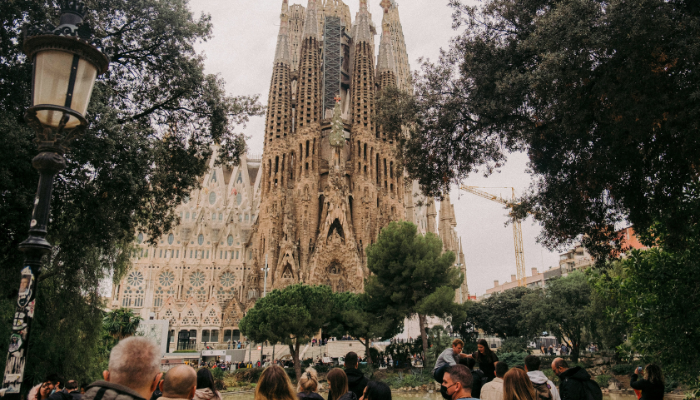
Image credit: Colin + Meg for Unsplash
If there’s one attraction worth building your itinerary around, it’s Sagrada Família.
I know that’s not a particularly original statement. But after helping travelers plan Barcelona 3-day itinerary for years, it’s still the attraction that receives the strongest reactions.
Most people arrive expecting a beautiful church. What surprises them is how unusual it feels.
The towers don’t rise in neat, symmetrical lines like traditional European cathedrals. Instead, they twist upward in a way that almost feels organic, as though the building has grown rather than been constructed.
Two pieces of advice I always give: don’t arrive exactly at your entry time. Get there at least 30 minutes early. Walk around the entire exterior first. The Nativity Façade and Passion Façade tell very different stories, and understanding them makes the interior much more meaningful. And another is to book a ticket for a Sagrada Familia guided tour with tower access.
Once inside, look up. Visitors often spend the first few minutes completely silent.
The columns branch outward like trees, and the colored light filtering through the stained-glass windows changes constantly throughout the day. Even travelers who aren’t particularly interested in churches tend to leave impressed.
Allow around two to three hours here. Don’t rush it. Barcelona offers plenty of attractions. Only a few feel genuinely unique.
This is one of them.
Coffee Break in Eixample
After leaving Sagrada Família, resist the temptation to immediately move on to the next attraction.
One thing I love about Barcelona is that sightseeing doesn’t always need to feel like sightseeing.
Spend some time walking through Eixample. The neighborhood’s grid layout might sound boring on paper, but it’s actually fascinating once you’re walking through it. Many street corners are cut diagonally, creating more open intersections and making the district feel surprisingly spacious.
Grab a coffee at a local café and simply watch the city move around you.
This slower pace is part of the Barcelona experience.
Lunch Near Passeig de Gràcia
For lunch, avoid restaurants directly facing major tourist landmarks. Prices tend to be higher while the food is often less memorable. Instead, walk a street or two away and look for places filled with locals on their lunch break.
Barcelona rewards curiosity. A restaurant with handwritten specials and no one trying to pull you inside is usually a good sign. Order a few dishes to share.
Patatas bravas, croquettes, grilled vegetables, and pa amb tomàquet remain classics for a reason.
Afternoon: Casa Batlló
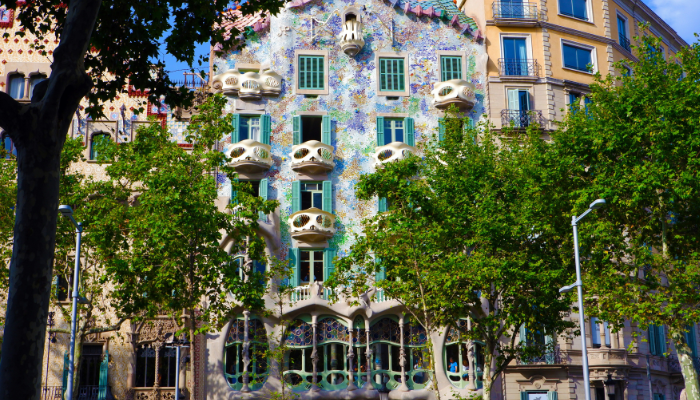
Image credit: Ruggiero Calabrese for Unsplash
By the time you reach Casa Batlló, you’ll already recognise some of Gaudí’s recurring themes.
Nature. Curves. Movement.
Almost nothing is completely straight. Many visitors spend most of their time photographing the exterior, and understandably so. The façade resembles something from a fantasy novel.
But I actually find the interior more interesting. The staircase, light wells, and rooftop reveal how obsessively Gaudí thought about light, airflow, and everyday living.
One detail people often miss is how different the building feels as sunlight changes throughout the afternoon. If you enjoy architecture, this is somewhere worth exploring slowly rather than racing through with an audio guide.
Passeig de Gràcia
After Casa Batlló, spend time wandering along Passeig de Gràcia. This isn’t simply a shopping street. It’s one of the best places to understand Barcelona’s Modernist movement.
Look upward occasionally. Some of the most beautiful details are above eye level.
Tourists often focus on shop windows and miss entire façades.
Sunset at Bunkers del Carmel
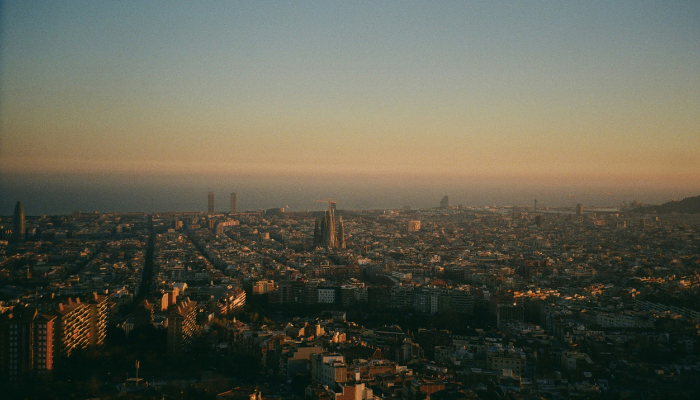
Image credit: Vincenzo Montagna for Unsplash
When people ask me for Barcelona’s best sunset viewpoint, rooftop bars are usually the first suggestion they hear. They’re fine. But if I only had one evening in Barcelona, I’d choose Bunkers del Carmel.
Every time.
The viewpoint sits high above the city and offers a perspective that photographs struggle to capture. From here, Barcelona suddenly makes sense.
You can see the grid of Eixample, the coastline, the mountains behind the city, and the towers of Sagrada Família rising above everything else.
Arrive at least an hour before sunset. Bring water. Wear comfortable shoes.
And don’t be surprised if you end up staying longer than planned.
Some of the best travel moments happen when there’s nothing left to do except sit and watch the light change.
Dinner in El Born
Finish your first day in El Born.
Compared with the grand avenues of Eixample, the neighborhood feels more intimate.
Narrow streets, lively wine bars, small restaurants, and people lingering outside long after dinner create exactly the atmosphere many visitors imagine when they picture evenings in Spain.
Don’t over-plan tonight.
Order a few dishes.
Try local wine.
Stay out a little later than usual.
Tomorrow you’ll explore the oldest part of Barcelona.
Day 2: Medieval Barcelona, Local Food, and the Mediterranean
If Day 1 of your Barcelona itinerary for 3 days was about Barcelona’s most famous landmarks, Day 2 is about understanding the city beneath the postcards.
Today you’ll walk through neighborhoods that existed long before Gaudí was born, eat some of the city’s best food, and finish by the sea.
One mistake I often see first-time visitors make is spending too much time on La Rambla.
It’s worth seeing once.
It’s not worth giving half your day to.
Instead, use La Rambla as a pathway into the places that make Barcelona interesting.
Morning: Get Lost in the Gothic Quarter
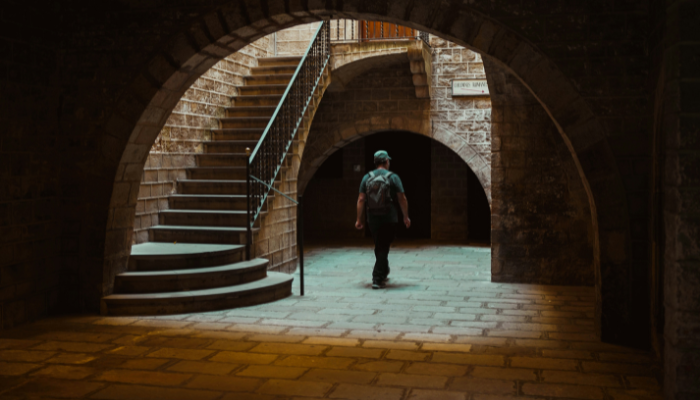
Image credit: Yomex Owo for Unsplash
I know travel writers love saying “get lost.”
Most of the time it’s lazy advice. In Barcelona’s Gothic Quarter, however, it’s genuinely the best way to explore. The neighborhood wasn’t designed for tourists. It wasn’t even designed for modern cities.
Many of its streets date back centuries, and the layout still reflects medieval Barcelona. Rather than following a strict route, give yourself permission to wander.
Turn down narrow alleys. Walk into small squares. Take side streets simply because they look interesting.
Travelers often say that some of their favorite corners of the Gothic Quarter are places they couldn’t find again without a map. Look up often. Visitors spend so much time staring at Google Maps that they miss carved stone balconies, hidden courtyards, and centuries-old architecture above them.
Barcelona rewards curiosity. The Gothic Quarter rewards it even more.
Tips: The best way to explore the place is to book a combo ticket which includes a Barcelona City Tour Hop-On, Hop-Off & Gothic Quarter Walking Tour. You’ll thank me later!
Stop at Barcelona Cathedral
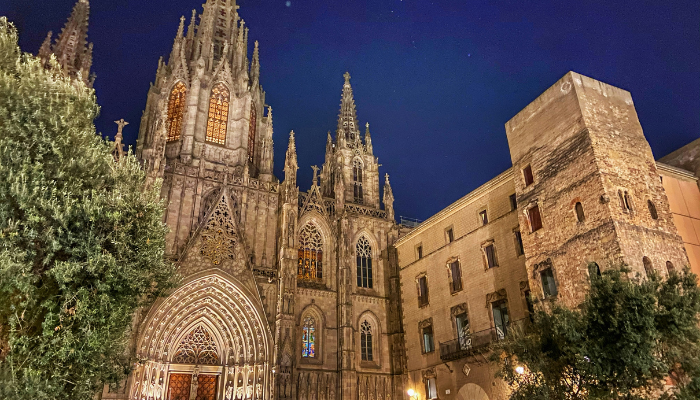
Image credit: W K for Unsplash
The first thing many travelers say after visiting Barcelona Cathedral is some version of:
“I didn’t realise this existed.”
Sagrada Família receives most of the attention, but Barcelona Cathedral offers a completely different experience. Where Gaudí’s masterpiece feels imaginative and unconventional, the cathedral feels timeless. The Gothic façade is impressive, but I always encourage visitors to spend time in the cloister. It’s quieter. Less crowded. And somehow easier to appreciate.
If you’re comfortable with heights, take the lift to the rooftop.
The views over the old city are worth it, particularly in the morning when the light is softer.
Coffee Break in Plaça Reial
Before heading toward lunch, stop in Plaça Reial.
Tourists often pass through quickly on their way somewhere else. Slow down here. Find a seat outside. Order a coffee.
Watch street performers set up for the day. Observe locals crossing the square on their way to work. Travel isn’t always about seeing something spectacular.
Sometimes it’s simply about sitting somewhere long enough to understand its rhythm.
Lunch at La Boqueria Market
You’ll hear mixed opinions about La Boqueria. Some travelers love it.
Others claim it’s become too touristy. The truth is somewhere in the middle.
Yes, it’s busy.
Yes, it’s crowded.
But it’s still one of the most exciting food markets in Europe. The trick is knowing how to approach it. Most visitors stop at the first stalls they see near the entrance.
Don’t. Walk deeper inside. The atmosphere changes. The crowds thin slightly. The food often improves.
You’ll find seafood counters displaying prawns, squid, and shellfish that were swimming a few hours earlier.
Fresh fruit juices, Iberian ham, local cheeses, olives, and Catalan specialities compete for attention at every turn.
If you’re traveling with someone, order several small dishes and share. You’ll experience much more that way.
Afternoon: Explore El Born
After the energy of La Boqueria and La Rambla, El Born feels noticeably calmer. That’s one reason I deliberately place it after lunch in this itinerary.
The neighborhood has a creative atmosphere that feels natural rather than manufactured. Small boutiques sit beside wine bars.
Independent galleries share streets with family-run cafés. Unlike some historic districts in Europe, El Born still feels lived in.
People actually live here. Work here. Meet friends here.
You’ll notice it immediately. The pace changes. The city feels less like a tourist destination and more like a neighborhood. Spend a few hours wandering without an agenda. Some of the best discoveries happen when you’re not looking for them.
Optional Stop: Picasso Museum
If art interests you, this is the ideal point to visit the Picasso Museum.
What many visitors don’t realise is that the museum focuses heavily on Picasso’s early years. You won’t simply see famous masterpieces. You’ll see how his style developed over time.
Even travelers who aren’t particularly interested in art often find that aspect fascinating.
Late Afternoon: Barceloneta Beach
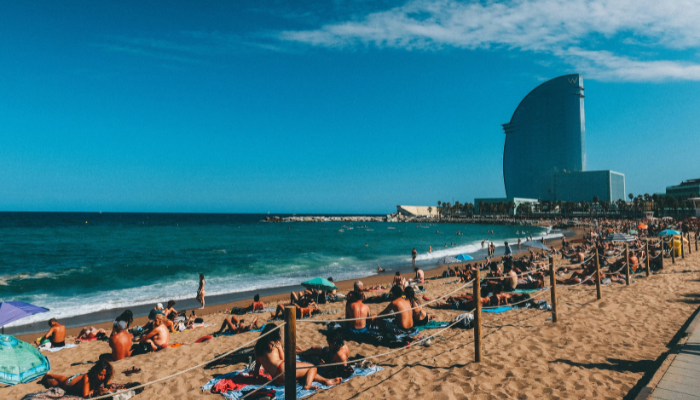
Image credit: Marc Fanelli-Isla for Unsplash
One of Barcelona’s greatest strengths is how easily the city connects with the sea. Within half an hour, you can move from medieval streets to the Mediterranean coastline.
Not many European cities can offer that. Barceloneta isn’t a secluded beach.
You won’t find empty stretches of sand or tropical scenery. What you will find is energy. Joggers moving along the promenade. Groups playing volleyball. Cyclists passing by. Families enjoying the beach after work.
Around late afternoon, the atmosphere becomes especially enjoyable. The harsh midday heat begins to fade.
Locals start arriving. The city seems to exhale. If the weather is warm, bring swimwear.
Even travelers who didn’t plan on swimming often end up taking a quick dip.
Tips: One more thing I want to add here: if you’re not a beach lover but still want to experience the city from water, I suggest you to take a Barcelona boat tour. It’s the best way to see the city from a different perspective and take the memories back home.
Dinner by the Waterfront
Barcelona has no shortage of restaurants serving paella. Unfortunately, not all of them serve good paella.
A useful rule? Avoid restaurants with giant laminated menus featuring photographs of every dish. Instead, look for places where locals are actually eating.
Order seafood if it’s available. Barcelona’s coastal location means fresh fish often shines far more than heavily marketed tourist dishes.
Then take one final walk along the waterfront before heading back.
Tomorrow, you’ll explore a side of Barcelona that many first-time visitors miss completely.
Day 3: Park Güell, Gràcia, and the Barcelona Most Tourists Never See
By your third day of your Barcelona 3-day itinerary, you’ll have already seen Barcelona’s headline attractions. Now it’s time to slow down.
This day is intentionally less structured.
One thing I’ve learned while planning city itineraries is that travelers often need breathing room by Day 3. You don’t want every hour scheduled. You want time to enjoy the city.
Early Morning: Park Güell
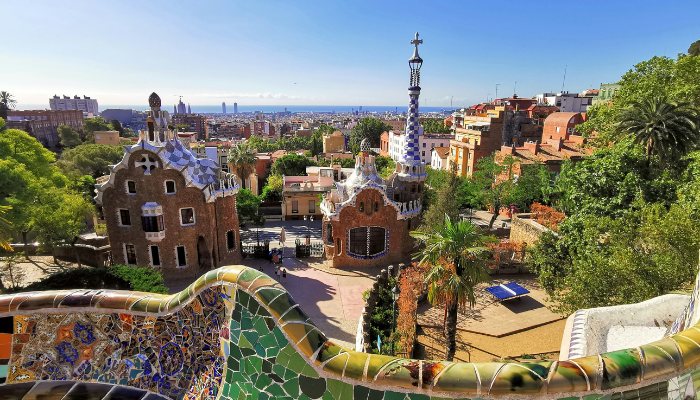
Image credit: Dorian D1 for Unsplash
If you’ve been following this Barcelona travel guide properly, today starts early.
Park Güell is one attraction where timing genuinely matters. Get a Park Güell admission ticket and arrive shortly after opening if possible.
The difference between 9 AM and midday can be significant. Crowds are lighter. Temperatures are cooler. Photography becomes far easier.
Most visitors arrive expecting colorful mosaics. That’s certainly part of the experience. But what surprises many people is how large the park feels. The famous terrace only represents a small section of the site. The winding pathways, stone structures, gardens, and viewpoints deserve just as much attention.
One thing I particularly enjoy is watching how people react when they first see Barcelona spread out below them. Even after several days in the city, the view remains impressive.
Late Morning: Discover Gràcia
If Barcelona has a neighborhood that consistently wins people over, it’s Gràcia.
Originally an independent town, it still feels different from the rest of the city. The streets are narrower. The pace is slower. The atmosphere feels local.
You’ll find small squares filled with residents chatting over coffee rather than tourists rushing between attractions. This is where I’d recommend spending an unhurried morning.
Grab breakfast or brunch. Browse local shops. Sit in a plaza and watch daily life unfold.
Many visitors tell me Gràcia becomes their favorite part of Barcelona, even though they had never heard of it before arriving.
That says a lot.
Lunch in Gràcia
Stay here for lunch. Some of Barcelona’s most enjoyable meals happen away from major tourist areas. Menus tend to be more local. Prices are often better.
And you’re less likely to find yourself surrounded entirely by visitors.
A long lunch feels particularly appropriate on your final day. Barcelona isn’t a city that should be rushed.
Afternoon: Plan Your Own Barcelona Itinerary
At this point, I wouldn’t force another packed sightseeing schedule. You’ve already seen the city’s major highlights.
Now follow your interests.
If You Love Architecture
Book a skip-the-line line ticket to Casa Milà (La Pedrera) and spend the whole afternoon here.
Many architecture enthusiasts actually prefer it to Casa Batlló.
The rooftop alone is worth the visit.
If You Love Art
Return to El Born and visit additional galleries and museums.
Barcelona’s creative scene extends far beyond Picasso.
If You Love Food
Go for a Barcelona Tapas Crawl, a small group tour.
Take a cooking class, like Taste Barcelona: A Market To Table Cooking Class.
Or simply spend the afternoon moving between tapas bars.
Honestly, some of my favorite travel memories have involved nothing more than eating and walking.
If You Love the Beach
Head back to the coastline. Just relax.
No guilt required.
Not every hour of a trip needs to be productive.
Your Final Barcelona Sunset
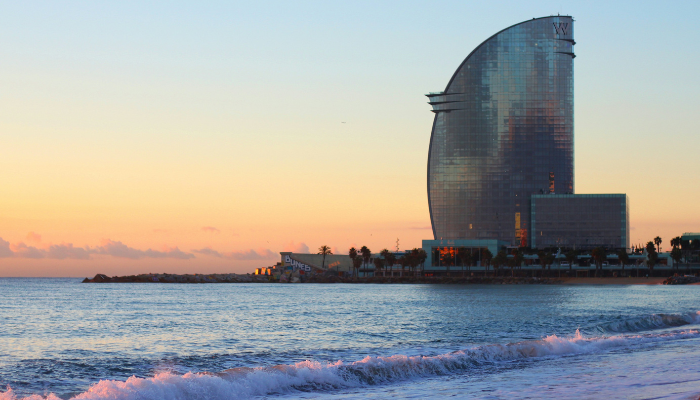
Image credit: MIGUEL BAIXAULI for Unsplash
For your last evening, resist the urge to squeeze in one final attraction. The city has already given you enough. Instead, revisit the place you enjoyed most.
Maybe it’s Barceloneta.
Maybe it’s El Born.
Maybe it’s a small square in Gràcia where you spent an unexpectedly pleasant morning.
Order a final glass of wine. Watch people go about their evening. Reflect on how much ground you’ve covered in three days.
Not just attractions. Neighbourhoods. Meals. Conversations. Atmospheres.
That’s what makes Barcelona memorable. The landmarks get people to visit. The everyday moments are what make them want to come back.
Is a Hop-On Hop-Off Bus Worth It in Barcelona?
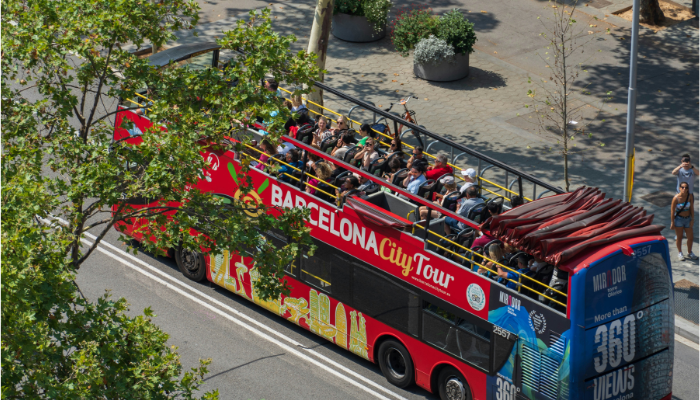
Image credit: Howei Wang for Unsplash
Now, here comes an important question: what would be the best possible way to explore Barcelona for the first time, without any stress or language barrier?
You can ask this question on Google or any travel forum, but here’s the answer.
For first-time visitors, I think a Barcelona tourist bus tour is the easiest way.
Particularly if you’re trying to understand the city’s layout quickly.
Barcelona spreads out more than many travelers expect, and attractions like Park Güell, Sagrada Família, Barceloneta, and Montjuïc aren’t all conveniently connected by walking.
The Barcelona Bus Turístic hop-on hop-off tour remains one of the easiest ways to gain an overview of the city before exploring individual neighborhoods on foot.
If you’re comparing different bus tours, read our guide on the differences between City Tour and Bus Turístic before booking.
You can also check out our complete Barcelona hop-on-hop-off bus guide to decide whether it fits your travel style.
[product_card="39754,39755,39754"]
Final Thoughts
When people describe Barcelona after their first visit, they rarely start by talking about attractions or things to do in Barcelona. They talk about a sunset they weren’t expecting. A tiny tapas bar they found accidentally. A neighborhood square that felt more authentic than anything on their itinerary. That’s why I’ve designed this Barcelona itinerary the way I have. Yes, you’ll see the famous landmarks. But you’ll also have time to experience the city between those landmarks.
And in my experience, that’s where the best memories a Barcelona itinerary can offer.